
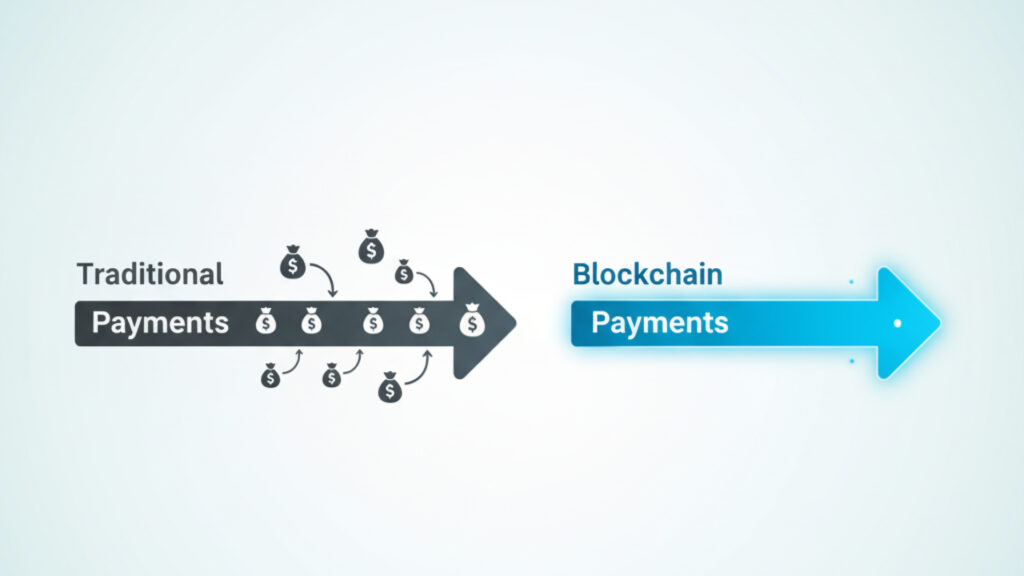
As a small or medium-sized business owner, you’re likely all too familiar with the frustrations of modern payment processing. Exorbitant transaction fees eat into your profits, settlement times can be painfully slow, and the constant threat of chargebacks and fraud creates a background of uncertainty. This erosion of trust in traditional financial systems is a significant pain point. However, a new technological shift is offering a powerful solution: blockchain payment processing. This innovative approach is poised to revolutionize how SMBs handle transactions by delivering unparalleled security, transparency, and cost-efficiency, restoring the trust that businesses need to thrive.
The Rise of Web3 Payment Solutions for Business
At its core, a blockchain is a distributed, unchangeable digital ledger. Think of it as a shared accounting book that everyone can see, but no single person can alter. Every transaction is a “block” that is cryptographically linked to the one before it, creating a “chain.” Web3 payment solutions for business are built on this foundation. Instead of routing payments through multiple intermediaries like banks and processing companies, blockchain enables direct, peer-to-peer transactions between you and your customer. This direct line not only speeds up the entire process but also introduces a level of transparency that has been missing from traditional finance.
How Blockchain Helps Reduce Business Transaction Fees
One of the most immediate and impactful benefits of blockchain technology is its ability to reduce business transaction fees. Traditional credit card processors typically charge between 1.5% and 3.5% of each transaction value. According to Forbes, these fees can add up to thousands of dollars in annual costs for an SMB. Blockchain networks largely eliminate the middlemen who are responsible for these high costs. While there are still network fees for processing a transaction on the blockchain, they are often a fraction of what traditional platforms charge, especially for cross-border payments. This means more of your hard-earned revenue stays in your pocket.
Is Decentralized Finance for SMBs Actually Secure?
It’s natural to question the security of a new financial technology, especially when it involves your business. So, is decentralized finance for SMBs a secure alternative? The answer lies in the architecture of the blockchain itself. Every transaction is secured and verified using advanced cryptography, making it nearly impossible to alter or counterfeit. Furthermore, because the ledger is decentralized—meaning it’s stored across countless computers worldwide—there is no single point of failure for hackers to target. Unlike a centralized bank server, the system remains operational and secure even if some computers go offline. This model shifts trust from a single, fallible institution to a transparent, verifiable, and collectively maintained network.
Conclusion
The limitations of our current financial infrastructure are clear, but the path forward is becoming increasingly bright. By embracing blockchain payment processing, small and medium-sized businesses can move beyond a system defined by high fees and uncertainty. This technology offers a tangible way to cut operational costs, enhance security, and rebuild trust through radical transparency. If you’re ready to future-proof your business and explore the next generation of financial tools, now is the time to investigate the adoption of Web3 services and products.